




CX to CX: How Leading Brands in Japan Blend Human Touch and Digital Scale
- Home
- Insights
- Articles
- Digital Experience (DX)
- CX to CX: How Leading Brands in Japan Blend Human Touch and Digital Scale
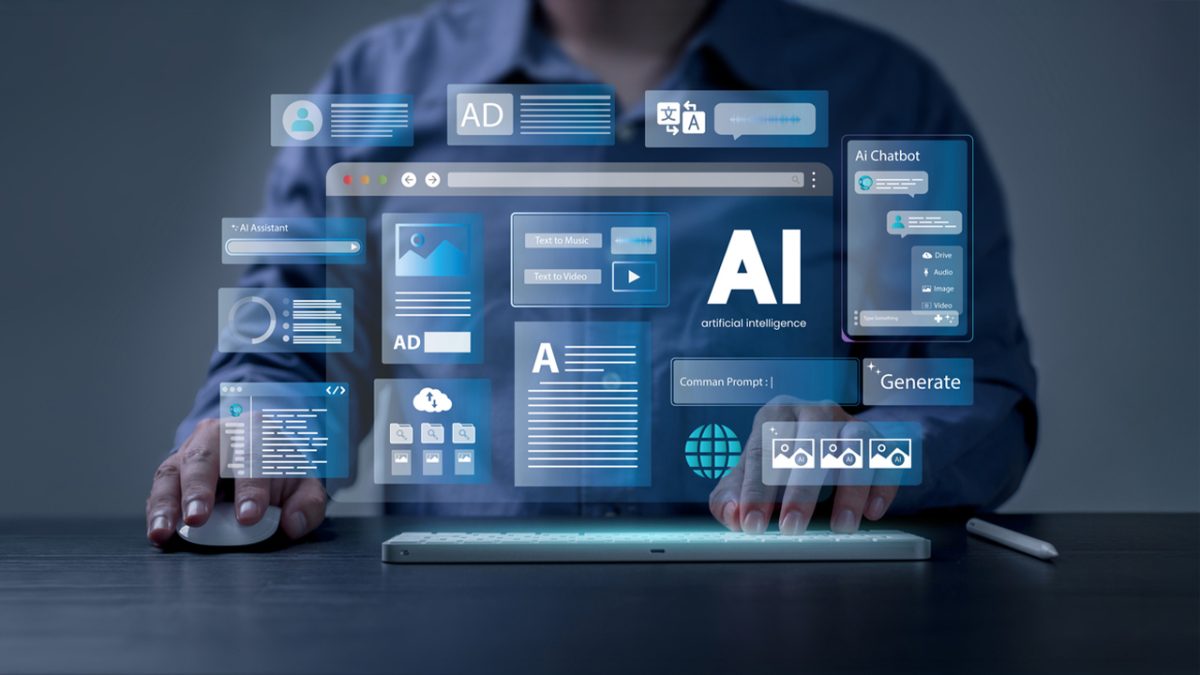
In the boardroom discussions of Tokyo’s major consumer businesses, a dangerous misconception can often take hold. It is the belief that digital transformation (DX) is primarily a mechanism for cost reduction – a way to strip cost out of the P&L by replacing expensive human labor with automated efficiency.
In many global markets, this logic holds. But in Japan, it is a strategic trap.
In Japan, digital transformation cannot be reduced to simple automation. To succeed, it must be anchored in the cultural principle that has defined Japanese service philosophy for centuries: omotenashi.
The concept is simple in theory yet punishingly difficult to execute at scale. Omotenashi is often translated simply as “hospitality,” but that definition fails to capture its depth. It refers to a standard of service where the provider anticipates a need before it is expressed, maintaining a demeanor of calm, respectful, and perfect attentiveness. It is not just about reacting to a request, it is about reading the air (kuuki wo yomu) and removing friction before the customer even feels it.
This is the invisible standard by which Japanese customers judge every interaction. And it is the primary reason why so many global “best practices” fail when imported to Japan. When a brand deploys a rigid chatbot or an efficient but tonally deaf IVR system, they aren’t just creating a bad user experience, they are violating a cultural social contract.
As digital channels – from LINE to web chat – become the primary touchpoints for the modern consumer, organizations face a profound challenge. They must figure out how to bring the heart of omotenashi into the digital realm without losing the warmth, nuance, and human depth that define the concept.
This is what TMJ calls Digital Omotenashi. It is not a paradox. It is a fusion of deep cultural sensitivity, rigorous CX design, and digital systems built to support – not replace – human judgment. It is the next competitive frontier in Japan, and for leaders looking to build loyalty in a digital age, it is the only way forward.
The Meaning of Omotenashi in a Digital Age
To understand why the standard digital playbook fails in Japan, we must first understand the baseline expectation of the Japanese consumer.
The distinction between mere “service” and genuine “omotenashi” is structural. Conventional service is reactive – it fulfills a stated requirement. Omotenashi is proactive – it is thoughtful, refined, and designed to exceed unstated expectations through empathy.
In a physical setting – a ryokan or a department store – this is delivered through body language, tone of voice, and by providing immediate physical assistance. The challenge today is that the venue has changed. The “storefront” is now a smartphone screen.
Japan is now one of the world’s most digitally mature service markets. Smartphone penetration has exceeded 92%, (https://www.makanapartners.com/the-new-rules-of-recruitment-in-japans-tightening-labor-market). LINE has achieved total dominance as the communication utility for daily life, with 97 million monthly active users covering the vast majority of the population (Statista: https://www.statista.com/statistics/560545/number-of-monthly-active-line-app-users-japan/).
Customers now demand omotenashi style experiences when they are tapping out a message on a train or navigating a mobile banking app.
Recent data reinforces this. Statista’s 2024 report on customer support expectations (https://www.statista.com/statistics/1563171/japan-importance-hospitality-customer-support/) indicates that Japanese consumers increasingly expect the same level of attentiveness and hospitality online as they do in physical locations.
The problem? Digital channels, by their nature, strip away context. They lack tone. They lack body language. Without careful design, a digital interaction feels cold, transactional, and abrupt – the exact opposite of omotenashi.
The Core Principle: Technology Should Enhance Human Empathy
The most common mistake organizations make is viewing AI as a replacement for human staff. In the US or Europe, “deflection rate” – the percentage of customers kept away from human agents – is often the primary KPI.
In Japan, prioritizing deflection over resolution is dangerous.
McKinsey’s research on generative AI adoption across Asia (https://www.mckinsey.com/capabilities/quantumblack/our-insights/the-state-of-ai-in-2023-generative-ais-breakout-year) finds a critical nuance – Japanese consumers continue to place a premium on human assistance for complex, emotional, or high-stakes matters. Even in sectors with high digital adoption, such as banking or telecommunications, customer satisfaction scores plummet when human agents are inaccessible during “moments of truth.”
Digital Omotenashi flips the script. It positions technology not as a substitute for the human agent, but as a “co-pilot” that elevates human performance.
In this model, the goal of AI is to remove the cognitive load from the agent so they can focus entirely on empathy. Tools like real-time interaction summarization, automated knowledge retrieval, and sentiment analysis run in the background. They handle the “data processing” work – finding the policy, typing the notes, verifying the account – so the agent can focus on the “human” work: listening, apologizing, and reassuring.
This is how you scale hospitality. You don’t automate the relationship; you automate the bureaucracy that gets in the way of the relationship.
The Trap of the “Uncanny Valley” in Service
One of the specific reasons global CX strategies fail in Japan is the underestimation of linguistic nuance. Japanese is a high-context language where the relationship between speaker and listener dictates the grammar.
The levels of formality (sonkeigo, kenjougo, teineigo) act as social signaling mechanisms. A small misstep – using a casual verb form with a senior customer, or an overly bureaucratic tone with a distressed user – can feel deeply disrespectful.
What that means is “good enough” translations can actually do more harm than benefit. A chatbot translated from English scripts often sounds robotic or jarringly direct to a Japanese ear.
Digital Omotenashi requires a rigorous “localization of tone.” It ensures that every automated message, every AI suggestion, and every IVR prompt is crafted with the same care as a concierge’s greeting. This requires:
- Tone-aware writing guidance for AI models to ensure they don’t hallucinate casualness.
- Context-sensitive message templates that adjust based on whether the customer is angry, confused, or asking a simple factual question.
- Structured escalation rules that recognize when a conversation has become too nuanced for a bot and immediately hand it to a human.
When a customer feels that the system “understands” their status and speaks to them appropriately, trust is built. When they feel processed by a machine, trust is lost.
Channel Orchestration as Modern Hospitality
In the traditional analog world, omotenashi meant that once you checked in, the staff already knew your name and your preferences whether you were in the lobby, the lounge or calling from your room. You didn’t have to explain yourself twice.
In the digital world, this is called Channel Orchestration.
Unfortunately, traditional customer journeys in Japan are often fragmented. A customer might start a query on a website, get stuck, call the contact center, and then have to repeat their name, account number, and problem to the agent. In the framework of omotenashi, this is a failure. It forces the customer to do the work.
Digital Omotenashi replaces this fragmentation with a unified fabric. Every channel speaks to the others. The customer’s history travels with them.
A powerful example of this in action is Visual IVR.
Navigating a voice menu is one of the most frustrating experiences for a modern consumer – listening to nine options, pressing buttons, and waiting on hold. It creates friction. Leading brands are replacing this with Visual IVR, where a customer calling in is offered a link via SMS. Tapping the link opens a visual interface on their smartphone that guides them through their options.
This allows the customer to self-serve efficiently for simple tasks (like checking a balance or rescheduling a delivery) while keeping the option to speak to a human just one tap away. It respects the customer’s time – a core tenet of hospitality.
The “Loyalty Multiplier” of Empathy
Why go to this effort? Is the investment in “tone” and “orchestration” worth it?
The data suggests that in Japan, empathy is an economic multiplier. Adobe’s Digital Trends Japan https://www.adobe.com/content/dam/cc/us/en/experience-cloud/digital-trends/pdfs/dx-trends-2024-japan.pdf study found a striking correlation – brands that consumers characterized as “thoughtful” or “empathetic” enjoyed a 2.8x higher loyalty rate than those that were merely functional.
In a market where price competition is fierce and products are often commoditized, the service experience is the differentiator. Japanese consumers are famously loyal, but that loyalty is fragile. It is maintained through consistent, respectful interactions. When a digital system feels personal – when it recognizes the customer, speaks their language properly, and solves their problem without friction – it deepens that loyalty.
Designing the Solution: The Union of CX and DX
Achieving Digital Omotenashi is not about buying a specific software platform. It is a design challenge. It requires the convergence of two disciplines that are often kept in silos: Customer Experience (CX) design and Digital Transformation engineering, or (DX) for Digital Experience.
TMJ’s model places Digital Omotenashi at the intersection of these two worlds.
The CX Foundation: This involves the “soft” skills of service design. It requires mapping the emotional peaks and valleys of a customer journey. Where is the customer anxious? Where are they confused? How should the language change at those points? Traditional Japanese service disciplines emphasize attentive listening and anticipation; CX consulting applies those principles to script design and workflow mapping.
The DX Engine: This is the “hard” infrastructure. It requires a technical foundation capable of supporting real-time data flow. This includes unified customer data platforms (CDP) to provide context, automated summarization tools to assist agents, and intelligent routing engines that prioritize urgent queries.
The market for these technologies is exploding. MarketReportAnalytics forecasts that Japan’s digital transformation market will grow from $77.7 billion in 2025 to more than $236 billion by 2030 (https://www.marketreportanalytics.com/reports/japan-digital-transformation-market-89178). A significant portion of this investment is flowing into modernizing the contact center stack.
But spending on technology without the CX blueprint is a waste. The “DX Engine” must be guided by the “CX Foundation.” When these two converge, Digital Omotenashi emerges. The service feels responsive, respectful, and effortless.
The Path Forward: A Roadmap for Digital Hospitality
For organizations operating in Japan, the mandate is clear. You cannot choose between “high touch” and “high tech.” You must deliver “high touch through high tech.”
Building this capability requires a structured roadmap:
- Diagnose the Friction Start by understanding where the spirit of omotenashi is currently being broken. Use mystery shopping and transcript analysis to find the points where customers are repeating themselves, where the tone feels robotic, or where dead-ends occur.
- Define the “Human-Digital” Balance Don’t try to automate everything. Identify the specific moments – complaints, complex claims, emotional distress – where human empathy is non-negotiable. Design your digital workflows to funnel these interactions to your best people, while automating the routine tasks that customers prefer to handle themselves.
- Localize the Logic Ensure your digital workflows respect cultural norms. Review your chatbot scripts, your IVR prompts, and your email templates. Do they reflect the proper levels of formality? Do they offer an “escape hatch” to a human?
- Orchestrate the Channels Break down the silos between voice and digital. Invest in technologies like Visual IVR and unified agent desktops that create a single, continuous conversation.
- Measure Sentiment, Not Just Speed Move beyond simple efficiency metrics like Average Handle Time (AHT). Start measuring sentiment and “effort scores.” Are customers feeling cared for? Are they frustrated?
Traditional Service in a New Way
Digital Omotenashi represents the next chapter in Japan’s service evolution. It is not a rejection of tradition; it is the adaptation of tradition to a new medium.
It captures what customers have always valued in Japanese culture – anticipation, respect, and care – and leverages modern digital capabilities to deliver those values at scale. The challenge for organizations is to build systems that support, rather than dilute, the empathy that lies at the heart of service.
Brands that succeed in this transition will stand out in an increasingly crowded market. They will offer a service experience that feels warm, personalized, and culturally aligned, even when it is delivered through a screen. For a market as discerning as Japan, this is no longer just a nice-to-have. It is a strategic necessity.
Related Insights


Expand Your Business in Japan Today!
Unlock growth opportunities in the Japanese market with our expert support. Contact us to explore how we can help you succeed.